
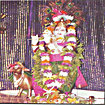
Gokul Ashtami
29 Aug 2026
The day Lord Shri Krishna took his incarnation to protect dharma is called Janmashtami or Gokul Ashtami.
In the past, the festival of Gokul Ashtami was celebrated in every household. Clean, black soil would be brought, sifted, soaked in water, and from that soil, all the Gokuls would be made. On a plate, a border, a cradle, and the idols of Shri Krishna and Balarama, all made of clay, would be placed, and rangoli (decorative patterns) would be drawn on the plate. In front of it, all the items from the Gokul would be kept, and the birth celebration would be performed at night. The next day, Balarama and Krishna would be taken out from the cradle and placed in grains, and the Balarama and Krishna kept in grains from the previous year would be buried together with the Gokul on the other plate.
Nowadays, due to lack of space and time, this celebration is held collectively, in public halls, or in Shri Krishna's temple.
On Gokulashtami day, people observe a fast, and on the next day, they make a homemade sweet filling (puranavarna), offer it as naivedya (sacred food offering), and then break the fast.
The Gokul Ashtami festival is celebrated from the first day (Pratipada) of Shravana Vadya to Ashtami. During this festival, a veena is kept for eight consecutive days. The veena that is held on the first day is placed down on the second day of the birth ceremony. On the day of breaking the fast, offerings are made to both the deity and the veena before placing the veena down. At the start, it is worshiped with turmeric and vermillion marks before being held.
Courtesy - Kuldevata: Ajit Patwardhan